
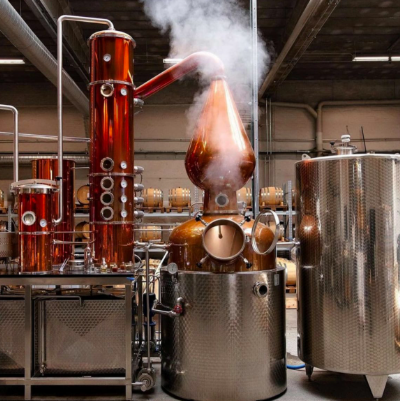
We recently completed a hazardous area classification at a distillery in Victoria. Due to increasing volumes, the client increased their production with the purchase of an additional Still unit and additional associated process equipment for the upgrade. This led to a review of the whole production area and a Hazardous Area classification of the new equipment, and a review of the existing classifications.
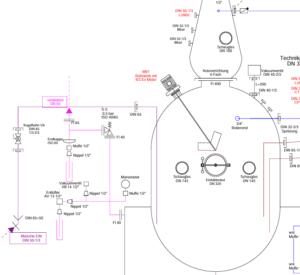
This hazardous area classification process had to be completed before instrumentation and control equipment could be selected for the new equipment, and control system design could be commenced.
The classification process for flammable vapours is prescribed in AS/NZS 60079.10.1 and this was the methodology followed:
- Meetings with process engineers to thoroughly understand the process during normal production operation.
- Identification of all sources of release throughout the process.
- Consideration of flammable vapour presence not just during normal production but also during maintenance activities.
- Investigation of all sources of release and grading of release and release rates based upon normal and adversarial environmental conditions.
- Consideration if misting is possible for any sources of release.
- Evaluation of all flammables and their properties – in this case the only flammable is alcohol.
- Evaluation if any ignition sources exist from non-electrical sources.
- Working with the process engineers in exploration of opportunities to reduce sources of release or frequencies and likelihood of release.
- Risk assessment of the consequences of flammable ignition event in the area to decide if higher or lower protection levels than the standard are required.
- Evaluation of ventilation.
- Creation of initial classification identifying opportunities to reduce hazardous areas.
- Creation of final report and documentation.
For this distilling process, there were many sources of release due to the quantity of valves, flanges and other fittings. The flammable liquid in use for this process was Ethyl Alcohol.
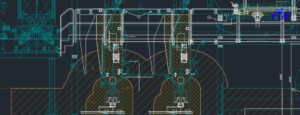
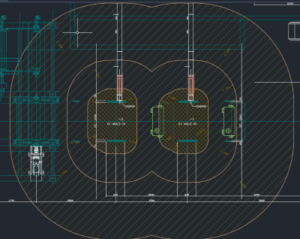
End to end, the classification was completed and final report and drawings issued 6 weeks from initial client meeting. We then engaged with the client and their contractors to support them in instrumentation selection and electrical designs.
Like all our clients, we have formed a long-term partnership, and we support them with many smaller expansion and improvement projects on this facility.
Contact us to discuss your hazardous area classification or hazardous area design requirements.
Browse our main hazardous area design and classification page Hazardous Area Design and Classification
